Dubai Telegraph - Top UN court to rule on right to strike

EUR -
AED 4.237873
AFN 75.006143
ALL 91.65231
AMD 419.444613
ANG 2.065988
AOA 1059.324362
ARS 1738.98302
AUD 1.618667
AWG 2.078549
AZN 1.974984
BAM 1.9565
BBD 2.324111
BDT 142.070829
BGN 1.942603
BHD 0.434952
BIF 3450.204488
BMD 1.153948
BND 1.468413
BOB 13.327653
BRL 5.934793
BSD 1.153903
BTN 110.728656
BWP 15.617452
BYN 3.503823
BYR 22617.37787
BZD 2.32071
CAD 1.607328
CDF 2668.505369
CHF 0.945014
CLF 0.027883
CLP 1100.958449
CNY 7.744663
CNH 7.740255
COP 3605.429283
CRC 516.380272
CUC 1.153948
CUP 30.579618
CVE 110.30303
CZK 24.303524
DJF 205.481735
DKK 7.475447
DOP 67.853688
DZD 154.1027
EGP 60.051795
ERN 17.309218
ETB 185.785668
FJD 2.553629
FKP 0.856156
GBP 0.85672
GEL 3.003688
GGP 0.856156
GHS 13.252569
GIP 0.856156
GMD 84.818903
GNF 10146.542222
GTQ 8.809075
GYD 241.414279
HKD 9.051994
HNL 31.064398
HRK 7.53355
HTG 150.81265
HUF 364.877115
IDR 20392.566414
ILS 3.493462
IMP 0.856156
INR 110.728564
IQD 1512.248658
IRR 1586216.715594
ISK 139.823838
JEP 0.856156
JMD 181.741872
JOD 0.818148
JPY 178.979638
KES 149.505841
KGS 100.912505
KHR 4674.631944
KMF 492.736046
KPW 1038.553432
KRW 1579.731368
KWD 0.356039
KYD 0.961636
KZT 516.09017
LAK 25824.015328
LBP 103331.973847
LKR 380.672895
LRD 201.470335
LSL 18.774625
LTL 3.407308
LVL 0.698011
LYD 7.315598
MAD 10.909909
MDL 20.061003
MGA 5048.522129
MKD 61.548087
MMK 2422.857259
MNT 4148.529231
MOP 9.323355
MRU 46.216036
MUR 54.50113
MVR 17.772223
MWK 2003.836949
MXN 19.781378
MYR 4.667485
MZN 73.749064
NAD 18.764951
NGN 1530.088503
NIO 42.245786
NOK 10.786349
NPR 177.16585
NZD 2.005556
OMR 0.4437
PAB 1.153903
PEN 3.87152
PGK 5.126417
PHP 72.385413
PKR 319.890676
PLN 4.346195
PYG 6868.397801
QAR 4.20262
RON 5.259923
RSD 117.361074
RUB 97.017284
RWF 1695.077073
SAR 4.330853
SBD 9.273413
SCR 15.763946
SDG 694.095515
SEK 11.291743
SGD 1.469333
SHP 0.856489
SLE 28.433133
SLL 24197.700082
SOS 659.424495
SRD 43.561837
STD 23884.390694
STN 24.867576
SVC 10.096525
SYP 15003.630246
SZL 18.740037
THB 38.406266
TJS 10.644716
TMT 4.050357
TND 3.362316
TOP 2.778429
TRY 56.148569
TTD 7.830734
TWD 36.726634
TZS 3053.674863
UAH 51.513084
UGX 4534.563397
USD 1.153948
UYU 46.406201
UZS 13575.857065
VES 970.682438
VND 29999.759244
VUV 136.347029
WST 3.158048
XAF 655.957
XAG 0.017884
XAU 0.000266
XCD 3.118602
XCG 2.079662
XDR 0.815901
XOF 655.957
XPF 119.331742
YER 272.903562
ZAR 18.791118
ZMK 10386.918281
ZMW 22.529865
ZWL 371.570737
SSP 6525.902235
MXV 2.242939
  • RIO

    -0.3800

    97.26

    -0.39%

  • NGG

    -0.0300

    74.93

    -0.04%

  • CMSC

    -0.1000

    20.32

    -0.49%

  • RBGPF

    0.0000

    69.99

    0%

  • RYCEF

    0.2600

    19.3

    +1.35%

  • GSK

    -0.0400

    50.01

    -0.08%

  • VOD

    0.1500

    17.68

    +0.85%

  • RELX

    -1.5000

    34.22

    -4.38%

  • BTI

    -0.7700

    56.52

    -1.36%

  • BP

    1.0300

    46.96

    +2.19%

  • AZN

    -1.9300

    161.85

    -1.19%

  • BCC

    0.6800

    75.93

    +0.9%

  • BCE

    -0.2534

    22.9

    -1.11%

  • JRI

    -0.2065

    11.62

    -1.78%

  • CMSD

    -0.1700

    20.07

    -0.85%

Top UN court to rule on right to strike
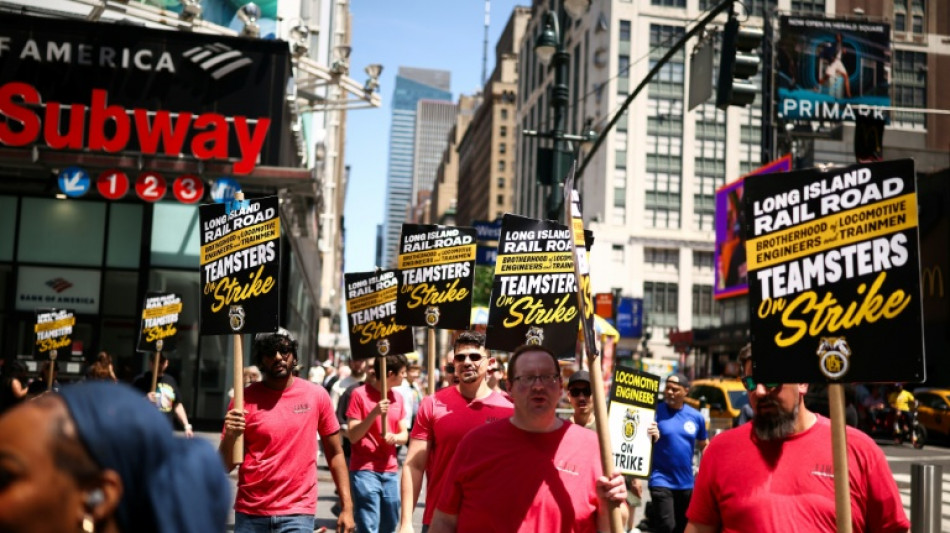
Top UN court to rule on right to strike / Photo: CHARLY TRIBALLEAU - AFP

Top UN court to rule on right to strike

The top United Nations court will on Thursday issue a ruling on the right to strike that both unions and employers say could have profound implications for global labour relations.

Text size:

The International Court of Justice has been asked to deliver a so-called advisory opinion on whether a treaty drawn up in 1948 by the International Labour Organisation implicitly enshrines the right to strike.

The treaty, known as Convention 87, is an agreement between unions and employers including the right "in full freedom, to organise their administration and activities".

Unions at the ILO say this by extension enshrines the right to industrial action, but employers disagree.

So the 15-judge panel at the ICJ in The Hague will hand down its ruling, which is not binding, but in practice will clarify the right to strike in international law.

The ICJ has been asked the question: "Is the right to strike of workers and their organisations protected under the Freedom of Association and Protection of the Right to Organise Convention, 1948 (No. 87)?"

Behind the dry legal interpretation of a decades-old treaty lies a heated battle between unions and employer groups at the ILO that played out in hearings in October 2025.

"This case is about more than legal abstractions," Harold Koh, representing the International Trade Union Confederation (ITUC), told the judges.

"It will affect the real rights of tens of millions of working people around the world," he added.

Koh warned that if the ICJ ruled the right to strike was not inherent in the Convention, companies and governments could start to unpick labour deals around the world.

"National employer groups would contest the right to strike country by country, focusing first on nations with compliant courts, weak civil societies and ineffective media," said Koh.

- 'Inflammatory and alarmist' -

On the other side of the argument, Roberto Suarez Santos, from the International Organisation of Employers, said the 1948 convention "neither explicitly nor implicitly covers the right to strike."

Santos noted that the rules surrounding industrial action varied widely from country to country -- whether emergency services were excluded, for example.

These differences "cannot be resolved by simply reading an abstract right to strike into Convention No.87 and trying to impose it on employers, workers and governments", said Santos.

Rita Yip, also representing the employers' groups, dismissed the union arguments as "inflammatory and alarmist".

The right to strike is still protected in national laws, argued Yip, and does not need to be enshrined in "boilerplate norms, imposed at the highest level".

Urging the court to answer "no" to the question before it, Yip said the case "goes to the credibility of the entire international labour system".

Both sides can at least agree on the importance of the case for labour relations.

"At first blush, this case may not seem momentous," said Koh from the trade union confederation.

"But your decision here will affect every worker in the world," he told the judges.

A.El-Nayady--DT