Water shortages spell trouble on Turkey's tourist coast / Photo: Yasin AKGUL - AFP
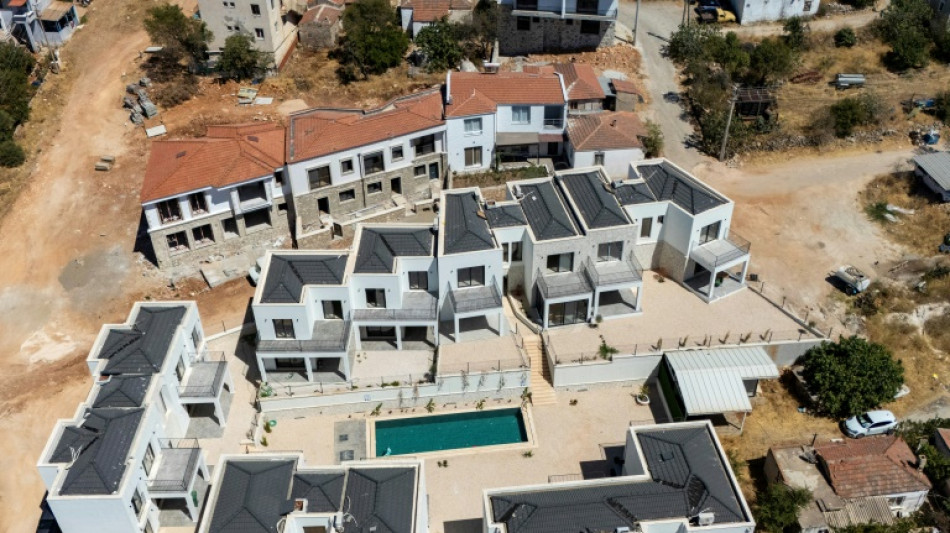
Ali Alyanak and his neighbours in Turkey's tourist hub Izmir now have to draw water from a shrinking aquifer 170 metres underground even as hotel pools remain full -- a sign for many of the region's dire water crisis amid prolonged drought.
"Our parents used to draw water from a depth of eight to nine metres, but now we have to go down to 170 metres (560 feet)," said Alyanak, the 39-year-old village chief in Germiyan.
To cope, authorities in nearby Cesme, a popular seaside resort in Izmir province on Turkey's western coast, are restricting drinking water access to 10 hours a day.
The city of Izmir itself, Turkey's third largest, will cut that access to just six hours starting Wednesday.
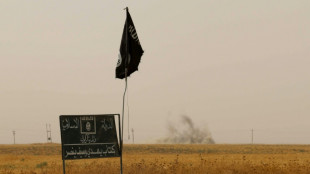
Desolate images from the large nearby dam that supplies Cesme, widely broadcast on television, illustrated the risks for the region: its water level has plunged to three percent of capacity, leaving behind a barren landscape.
For Alyanak and many others, the culprit is clear.
"Hotels are the main problem: The water in the pools evaporates, towels are washed daily and people take three to five showers a day, as soon as they go swimming or come back from outside," Alyanak fumed.
"It's a waste".
Climatologists say the Mediterranean basin -- which concentrates 30 percent of world tourism -- will see a sharp decline in rainfall over the coming decades, raising fears of more frequent and severe droughts as a result of global warming.
- Seawater pools? -
The almost complete absence of rainfall since autumn is largely responsible for the current crisis, with some scientists calculating that 88 percent of Turkey's territory is at risk of desertification.
Last week, mosque loudspeakers across Turkey issued prayers for rain.
But experts also highlight the impact of tens of thousands of visitors, which is putting pressure on tourism hotspots throughout the Mediterranean.
Selma Akdogan of the Izmir Chamber of Environmental Engineers said tourists consumed "two to three times" more water than locals.
This at a time when "water levels are falling not only in summer but also in winter", she said, noting that "Rainfall is less regular but more intense, making it more difficult for the soil to absorb rainwater."
She wants local authorities to have hotels fill their swimming pools with seawater, for example, and for locals to give up lawns and grass in favour of less water-intensive yards.
- 'A real problem' -
At the helm of a luxury 253-room establishment overlooking the turquoise waters of the Aegean sea, Orhan Belge has little patience for the media focus on the issue.
"Big four- or five-star hotels like ours have water tanks of 200-250 tonnes. We have water 24 hours a day," said Belge, who is also president of the city's hoteliers' union.
For him, the solution to water shortages lies mainly in desalination, a costly and energy-intensive process already used by some hotels in the region.
The manager of a small hotel in the city, who asked to remain anonymous, acknowledged that "water shortages are a real problem," but said he was primarily worried that use restrictions would prompt tourists to look elsewhere.
"Last summer, we were fully booked during the same period. And we were still full two weeks ago," he said.
"Now, the hotel is 80 percent empty and we have no reservations for August."
Sabiha Yurtsever, an 80-year-old retiree who has spent every summer in Cesme for the past 25 years, said she could not remember a summer so dry.
She blamed both the government and hoteliers for making the region unliveable.
"When forests burn, they build hotels instead of replanting," said Yurtsever, who spends the rest of the year in Izmir.
"The fewer trees you have, the less rain you will get."
I.Uddin--DT